The Ultimate Guide to Local SEO for Estate Agents in 2026

1. Why Local SEO Matters for Estate Agents
When a homeowner decides to sell, their first step is rarely walking into a high street branch; it is almost always a Google search. Queries like "estate agents near me" or "property valuation [town name]" drive the most highly qualified vendor leads in the industry. Local SEO ensures your agency appears precisely when a vendor is looking for your services.
Unlike national property portals, your website's true strength lies in its local relevance. By dominating the local search results, you capture the attention of vendors and landlords in your specific territory, establishing your brand as the leading local authority and generating a consistent stream of organic enquiries.
2. Setting Up and Optimising Your Google Business Profile
Your Google Business Profile (GBP) is arguably your most important local SEO asset. It powers your visibility in Google Maps and the coveted 'Local Pack'—the three map listings that appear at the top of local search results. An optimised profile dramatically increases your chances of appearing here.
Ensure every detail is complete and accurate. Use your exact business name, select the correct primary and secondary categories (e.g., 'Real Estate Agency', 'Property Management Company'), and upload high-quality images of your office, team, and premium properties. Regularly post updates and market news to signal active engagement to Google. For authoritative step-by-step guidance, the Google Business Profile support centre provides official documentation on every feature and optimisation available to business owners.
3. The Importance of NAP Consistency
NAP stands for Name, Address, and Phone number. Consistency across all online platforms is a critical ranking factor for local SEO. If Google finds conflicting information about your agency's location or contact details across different directories, it diminishes trust and harms your search rankings.
Audit your online presence to ensure your NAP details perfectly match those on your website and Google Business Profile. Even minor discrepancies, such as 'Street' versus 'St.', or missing unit numbers, can confuse search engines and negatively impact your local visibility.

4. Building Local Citations and Directory Listings
A citation is any online mention of your agency's NAP details. Building a robust portfolio of citations on reputable directories signals to Google that your business is legitimate and prominent within its community. Quality and relevance are far more important than sheer quantity.
Focus on authoritative local directories, industry-specific platforms (such as Zoopla or Rightmove agent directories), and prominent business listings like Yell and Yelp. Ensure your citations are accurate and updated whenever your business information changes to maintain local search authority.
5. Creating Location-Specific Content That Ranks
Content is the vehicle that drives SEO performance. For estate agents, this means creating rich, informative content tailored to the specific towns and neighbourhoods you serve. Area guides, local market reports, and community news demonstrate your local expertise to both users and search engines.
A well-executed property content marketing strategy positions your agency as the definitive local expert. Develop detailed pages for each core area you cover, highlighting schools, transport links, and property trends, naturally incorporating location-based keywords throughout the copy.
6. Earning Reviews and Managing Your Online Reputation
Online reviews are a powerful ranking factor for local SEO and a crucial element of social proof. A high volume of positive, recent reviews on your Google Business Profile significantly boosts your visibility in the Local Pack and influences vendor decision-making.
Implement a proactive strategy for requesting reviews from satisfied clients immediately after completion. Respond to all reviews—both positive and negative—professionally and promptly. This engagement demonstrates exceptional customer service and signals active management to search algorithms.
7. Technical SEO Fundamentals Every Agent Should Know
A visually stunning website is useless if search engines cannot crawl and index it effectively. Technical SEO forms the foundation of your online visibility. Your website must be fast, mobile-responsive, and structured logically to facilitate both user navigation and search engine crawling.
Ensure your site employs secure HTTPS encryption, features a clean URL structure, and utilizes XML sitemaps. Fast loading speeds are critical; optimize image sizes and streamline code to prevent slow pages from increasing bounce rates and negatively impacting your search rankings.
8. Using Schema Markup for Property Listings
Schema markup is a specialized form of code added to your website that helps search engines understand the specific context of your content. For estate agents, utilizing RealEstateAgent and Product schema can drastically improve how your listings appear in search results.
Implementing schema allows Google to display rich snippets—such as property prices, ratings, and specific features—directly on the search results page. These enhanced listings attract higher click-through rates and provide immediate value to users searching for properties.
9. Link Building Strategies for Estate Agents
Backlinks—links from other websites to yours—act as votes of confidence in the eyes of search engines. Earning high-quality backlinks from reputable local and industry websites is essential for improving your domain authority and search rankings.
Engage with local businesses, sponsor community events, or contribute expert property market commentary to local news outlets to earn valuable local links. Digital PR campaigns focused on property trends can also secure high-authority links from national publications, significantly boosting your SEO profile.
10. Measuring Your Local SEO Performance
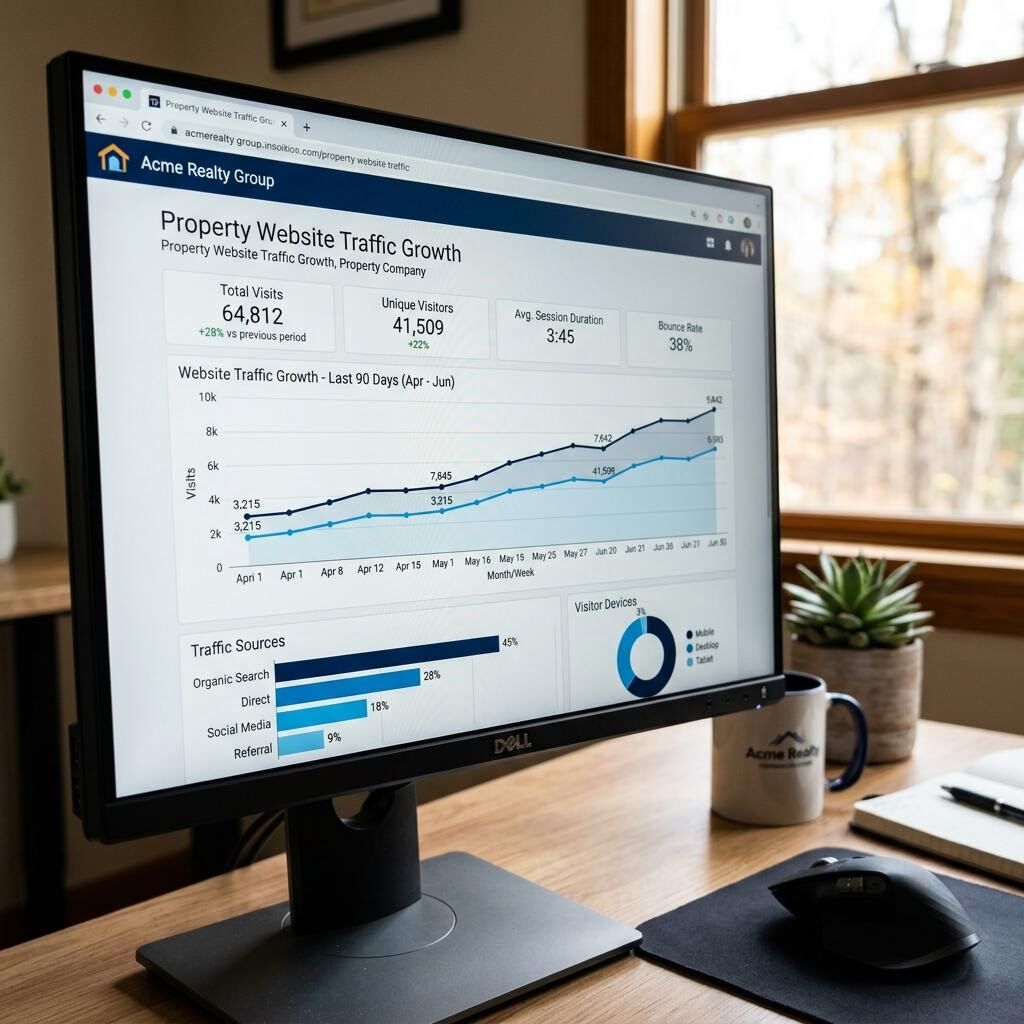
Effective SEO is an ongoing process that requires continuous monitoring and refinement. You must track key metrics to understand what is working and where improvements are needed. Focus on organic traffic, keyword rankings, and, most importantly, the number of leads generated from local search.
Utilize tools like Google Analytics and Google Search Console to monitor performance. Regular analysis allows you to adapt your strategy to shifting market trends. If you want to understand your current performance, get a free SEO audit for your estate agency and discover your untapped potential in local search.
Ready to get started?
Let us market your property.